The Agentic PoC Graveyard: Why “Faster Horses” Won’t Fix Your ROI
The adoption of Generative AI has shifted from a phase of experimental curiosity to one of strategic necessity. Across the enterprise landscape, the directive is consistent: operationalise AI to drive competitive advantage. Organisations are accelerating their adoption of enterprise AI platforms and deploying co-pilot assistants to every desktop. Yet, despite this investment, a significant number of initiatives are struggling to demonstrate tangible value beyond the Proof of Concept stage.
It’s cool, sure. It summarises emails beautifully. But has it fundamentally changed the business? Usually, the answer is no.
The reason isn’t the technology. The reason is that we are confusing “Personal Productivity” with “Process Reinvention.”
The “Low-Code” Trap: Faster Horses
There is a huge appetite right now for low-code/no-code agents. These are fantastic tools. They democratise AI, allowing non-technical staff to automate their daily friction points.
If an employee uses a simple agent to summarise their inbox or format a report, that is undeniably useful. It clears the backlog. It buys back time. But let’s be honest about what it is: Local Optimisation.
There is a famous (apocryphal) quote attributed to Henry Ford:
“If I had asked people what they wanted, they would have said faster horses.”
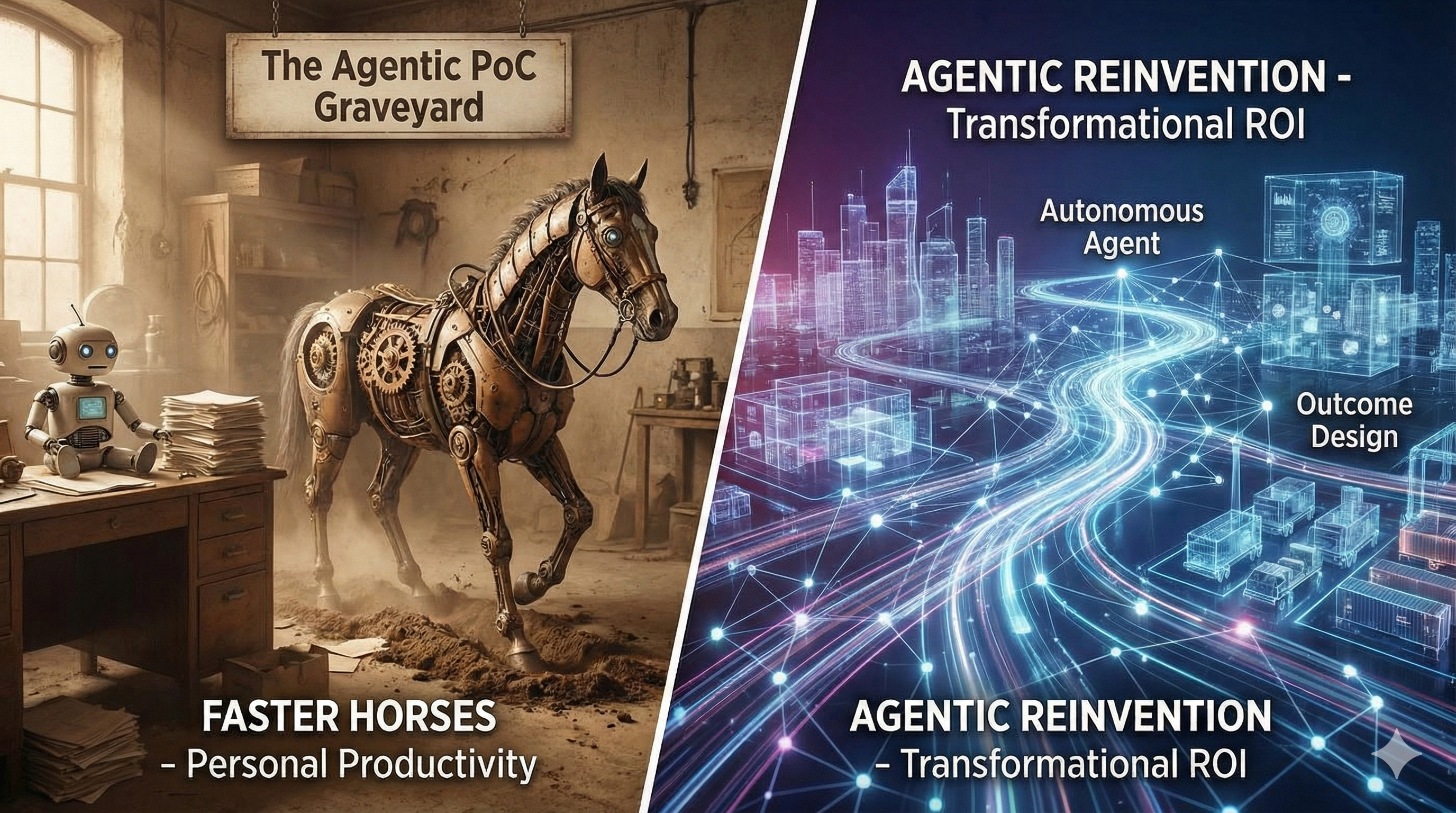 Figure 1: Are you just automating legacy friction, or are you designing the autonomous enterprise of the future?
When you focus on automating the existing human process, even with the best no-code tools on the market, you are essentially building faster horses. You are keeping the legacy workflow intact and just greasing the wheels. Real value doesn’t come from helping a human do a task 10% faster. It comes from asking if the human needs to do that task at all.
The Sliding Scale of Ambition
To find the real value in Agentic AI, we need to look past the individual user’s inbox and examine the end-to-end business flow.
Too often, enterprises stop at the “task” level, giving a user a tool to write an email faster. While this provides immediate gratification, it ignores the systemic inefficiencies that necessitated the email in the first place. We need to view AI adoption not as a single deployment, but as a maturity curve where value scales in direct proportion to autonomy.
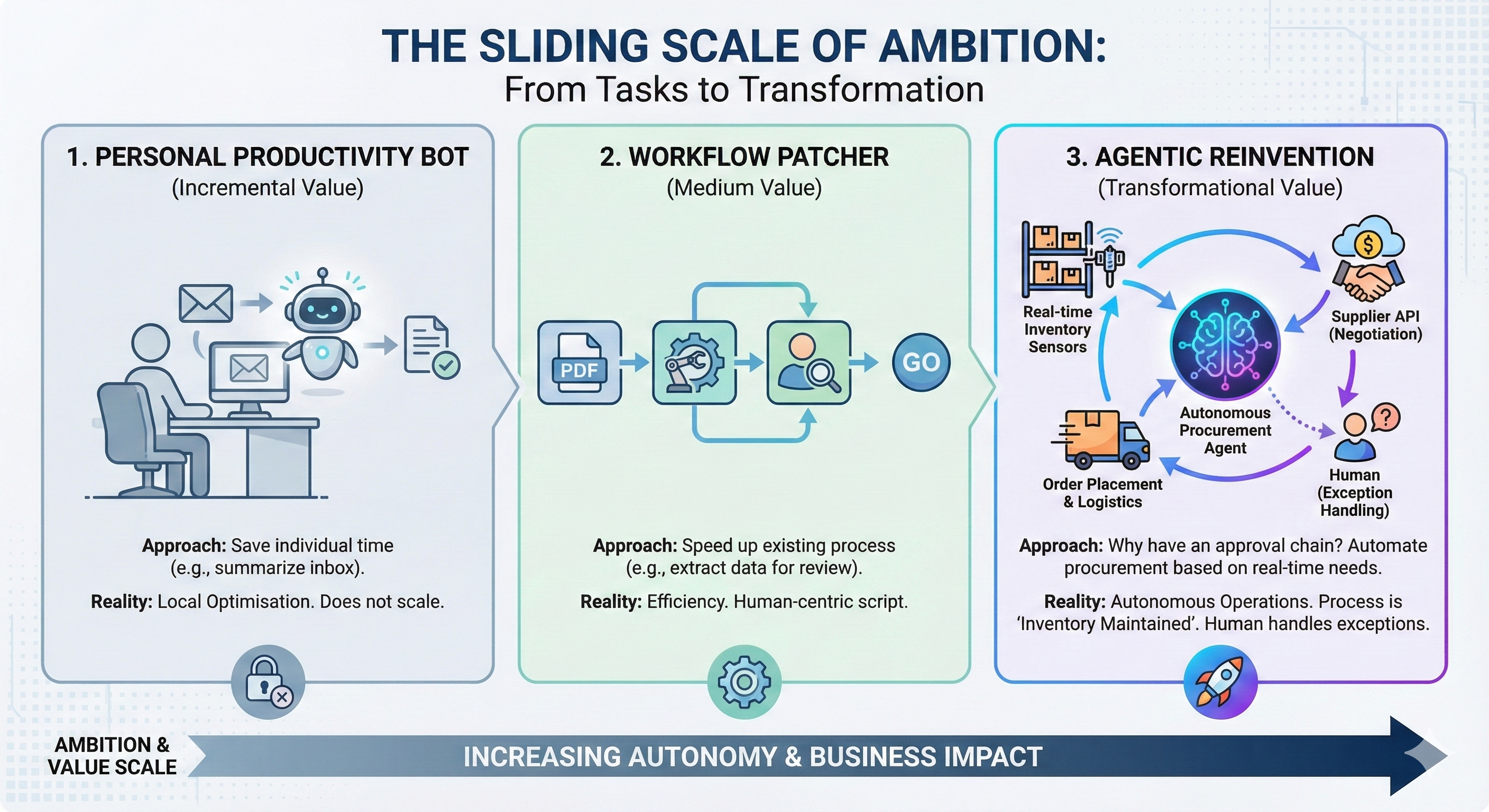 Figure 2: Moving up the value chain requires shifting focus from saving individual hours to reimagining end-to-end business flows.
Here is how the hierarchy of value breaks down:
1. The Personal Productivity Bot (Incremental Value)
- The Approach: “I want to save 3 hours a week on admin.”
- The Implementation: A user builds a low-code agent to organise their files or draft responses.
- The Reality: This is great for employee satisfaction and digital hygiene. It creates capacity at the individual level. However, it is not transformational. It doesn’t scale across the enterprise, and it doesn’t change the business model.
2. The Workflow Patcher (Medium Value)
- The Approach: “We need to speed up the client intake process.”
- The Implementation: You chain a few prompts together to extract data from a PDF and put it into a JSON format for a human to review.
- The Reality: Efficiency. You’ve removed some friction, but the workflow remains human-centric. The agent is acting as a sophisticated script, waiting for a human to hit “go.”
3. The Agentic Reinvention (Transformational Value)
- The Approach: “Why do we have a procurement approval chain for standard inventory?”
- The Implementation: You remove the human buyer from the loop entirely. An Agent monitors real-time inventory sensors and market pricing. When stock dips, it autonomously negotiates price with the supplier’s API, places the order within budget parameters, and schedules the logistics.
- The Reality: Autonomous Operations. The process is no longer “Purchase Request -> Approval -> Order.” The process is now simply “Inventory Maintained.” The human only gets involved if the negotiation fails.
Reimagine the Outcome, Don’t Just Automate the Task
The reason so many PoCs fail to scale is that they try to shoehorn agents into workflows designed for human cognitive limitations. Humans need breaks. Humans need context switching. Humans need visual forms.
Agents do not.
While low-code personal agents are a great starting point to get your workforce comfortable with AI, they are not the ultimate objective. To succeed, we need to fundamentally rethink the architecture of our work. You need to look at the end-to-end journey and ask: ‘If I didn’t have any human constraints, how would I solve this problem directly?’
We must look beyond simple conversational interfaces. The true capability lies in Reasoning Engines—systems capable of executing complex logic and triggering autonomous functions without human intervention.
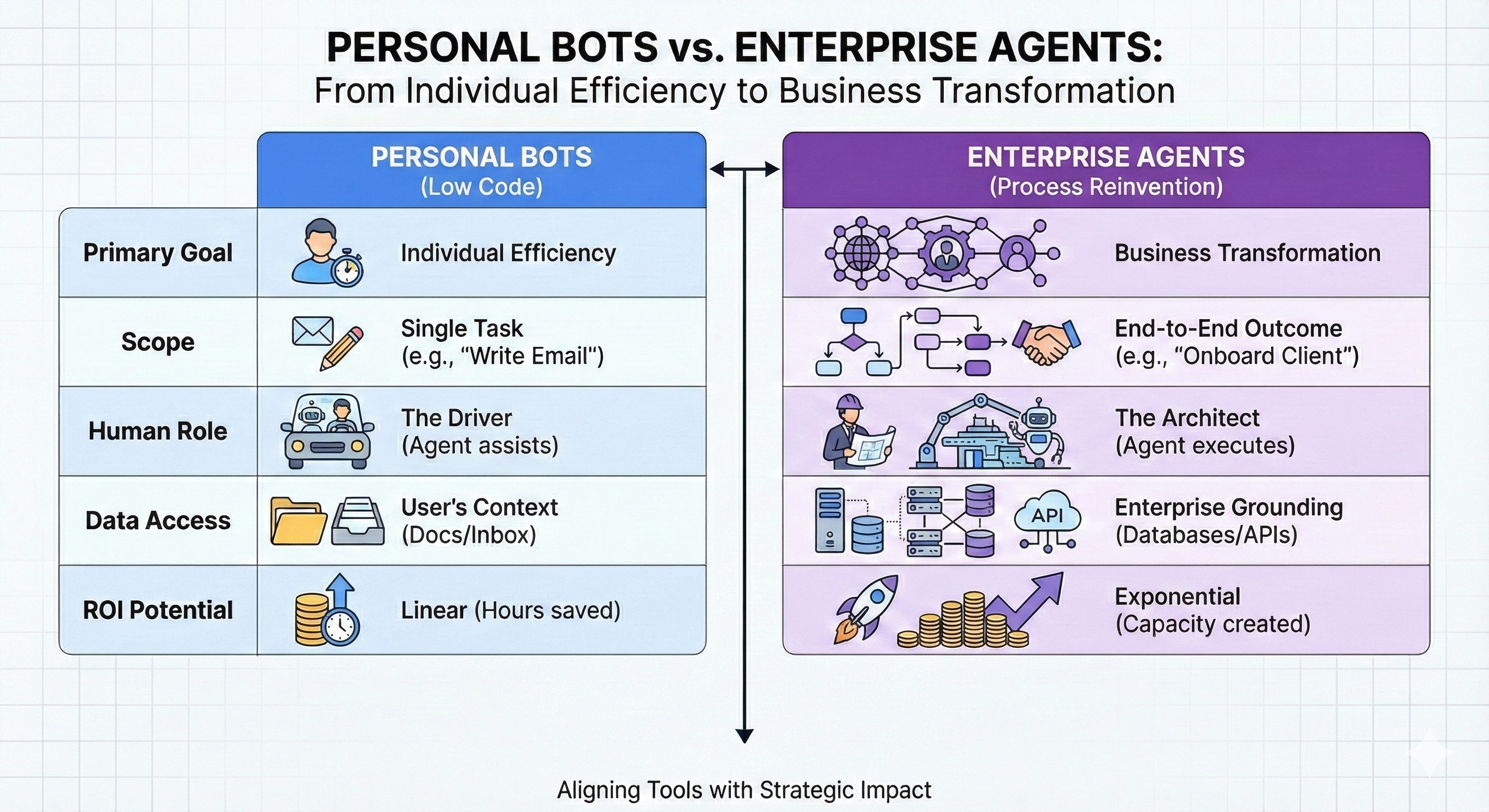 Figure 3: A side-by-side look at why low-code personal bots fail to scale, while enterprise agents grounded in data drive business transformation.
The Verdict
Do not confuse the novelty of personal automation with enterprise transformation. While saving individual employees time offers incremental gains, the true return on investment comes from fundamentally reimagining the workflow.
The organisations that define this era will not be those with the highest volume of chatbots, but those with the foresight to redesign their operational architecture for autonomous agents.